Monday, January 11, 2016

Top 15 Albums of 2015

With the start of the New Year, it is a time of reflection and resolutions. This past year of 2015 there were ups and downs with those we have lost and tragedies within our own lives. But there will always be great music, music that helps us get through the rough times and help us enjoy the good times. For this past year, I have compiled a list of my top 15 albums that I have listened to and liked.

15) “Suicide Society” – Annihilator
Annihilator is one of those thrash bands that would be in the next big 4 if the current big 4 did not exist. Ultimately my only impression before its release was the title track, since it was the single. Suicide Society is a good album but unfortunely has nothing new to offer. For example the song “Creapin’ Again” shares some lyrics in the chorus, with the song “Clown Parade”. I’m not trying to nitpick, because there are some good songs here. Jeff Waters need some more variation in the lyrics. I bought the deluxe version which has some rerecording of some of the old songs with the new line up. I was more interested in that and the commentary on the album that was also included, than the actual album.

Top 3 Tracks:
  1. Suicide Society
  2. Break, Enter
  3. Narcotic Avenue


14) “Birth and the Burial” – Act of Defiance
After Chris Broderick and Shawn Drover left Megadeth, due to creative reasons. One wondered what exactly they were going to do. Forming a band together was intriguing but I was curious in what direction they would go. The direction they chose was to go a more death metal route. The result is a decent album, but what really kills it for me is the vocals. The screaming and shouting just doesn’t do it for me. But the instrumentation of the rest of the band was good enough to redeem them in my opinion.


Top 3 Tracks:
  1. Refrain and Refracture
  2. Birth and the Burial
  3. Legion of Lies


13) “Farmikos” – Farmikos
With an early 2015 release in January, I had forgotten about this band and their album. Fortunately, I was listening to podcast by Eddie Trunk talking about this band and it jogged my memory. Former Ozzy guitarist, Joe Holmes, who was only a touring member of the Ozzy band, came out with a band that sounds eerily similar to Ozzy but a departure in the style. Overall I like the album, and would love to see what they do next.


Top 3 Tracks:
  1. Scapegoat
  2. King of Dust
  3. Am I One


12) “War of Kings” – Europe
Come on, the band known for two song in the US. “The Final Countdown” and the power ballad “Carrie”. A hugely overlooked band, but big globally. Hopefully now with the final countdown back in the charts due to the Geico commercial that airs every time I watch TV, maybe people can get into the band. One can only hope. As for the album, “War of Kings”, this is a great album. But sadly not many people over in the US will notice. Also the title track is a great addition, and would be in my top 5 tracks from the album.


Top 3 Tracks:
  1. Hole in my pocket
  2. Praise You
  3. Nothin To Ya


11) “Saint Asonia” – Saint Asonia
A new super group formed with Adam Gontier, Mike Mushok, Corey Lowery, and Rich Beddoe. I listened to this album on an indirect recommendation from a friend. This band’s style is very close to the style of music that I like. Good vocals and excellent musicianship. I’m surprised at how well it still holds. I still have some riffs stuck in my head.

Top 3 Tracks:
  1. Blow Me Wide Open
  2. King of Nothing
  3. Fairy Tale


10) “VII: Sturm Und Drang” - Lamb of God
This was the first Lamb of God album that I have listened to. I listened to this album for three reasons. One, because I heard Randy Blythe’s vocals on the song “Gift of Pain” by Metal Allengence. Two, due to the song “Overlord”, which has more traditional singing as opposed to their normal screaming. Finally Three, Chris Alder’s contribution to the Megadeth album “Dystopia”. As my introduction to this band, I find it oddly satisfying. I really don’t like screaming, but I can enjoy it fine as long as I can hear some semblance of lyrics. “VII: Sturm Und Drang” is a fine addition to my library of music, but I don’t see myself jumping head first into the realm of screaming in metal anytime soon.

Top 3 Tracks:
  1. Overlord
  2. Still Echoes
  3. 512


9) “Ride” – Motor Sister
Motor Sister is a tremendous tribute to the band Mother Superior, giving new life to their songs and an entry way for those how may have not have heard this band before. All the songs on this album are Mother Superior covers. I would have liked to know if Motor Sister thought of doing any original music, because they have such a good line up for this project. I have not heard of Mother Superior prior to this album but I am intrigued enough to check out that band.

Top 3 Tracks:
  1. Beg Borrow Steal
  2. Fool Around
  3. This Song reminds me of You


8) “Win Hands Down“– Armored Saint
I know of Armored Saint, because of their vocalist John Bush’s stint with Anthrax. The song “Win hands down” is a pleasant surprise. I don’t know any of their previous catalogue, but this album blew me away in how good it sounded and the quality of the songs. A great album for lovers of hard rock and heavy metal.


Top 3 Tracks:
  1. An Exercise in Debauchery
  2. Win Hands Down
  3.  Mess


7) “Battering Ram” – Saxon
The mighty Saxon strikes again with this hard hitting addition. Saxon is one of those bands that comes from the old school, like Motörhead. But also like Motörhead, they can come out with an album and still have that same sound and guttural reaction. Just awesome.


Top 3 Tracks:
  1. The Devil’s footprints
  2. Hard and Fast
  3. Battering Ram


6) “Psychic Warfare“– Clutch
This is my introduction to Clutch, so as my first soirée, I was surprised by what I had heard, because I really like this album as a whole. Each song is so strong, and I’m amazed I haven’t heard this band sooner.

Top 3 Tracks:
  1. Firebirds
  2. Behold the Colossus
  3. Sucker for the Witch


5) “Bad Magic” – Motörhead
Now as Motörhead’s final album, their swan song. It pleases me to say that this album is very very good. It’s Motörhead at its finest, and with the song “Until the end” a great reminder that Lemmy can sing softly but with passion. Truly a one of a kind, and an album worthy to buy in full.


Top 3 Tracks:
  1. The Devil
  2. Till the End
  3. Thunder and Lightning


4) “Metal Allegiance” – Metal Allegiance
Metal Allegiance was born on the Motörboat cruise. One of the bands had to bow out, so some of the musicians that were already there on tour assembled a group and played a set list. They created a phenomenal line up with a revolving door of musicians. The four key guys holding it together are Mike Portnoy (Dream Theather, Winery Dogs), David Ellifson (Megadeth), Alex Skolnick (Testament), and Mark Menghi.
It’s essentially a greatest hits of Thrash metal with original songs, of course not including the closing track which is a Dio cover. If I had to say specifically it’s a mixture of thrash, progressive and grove metal.

Top 3 Tracks:
  1. Pledge of Allegiance
  2. Let Darkness Fall
  3. Dying Song


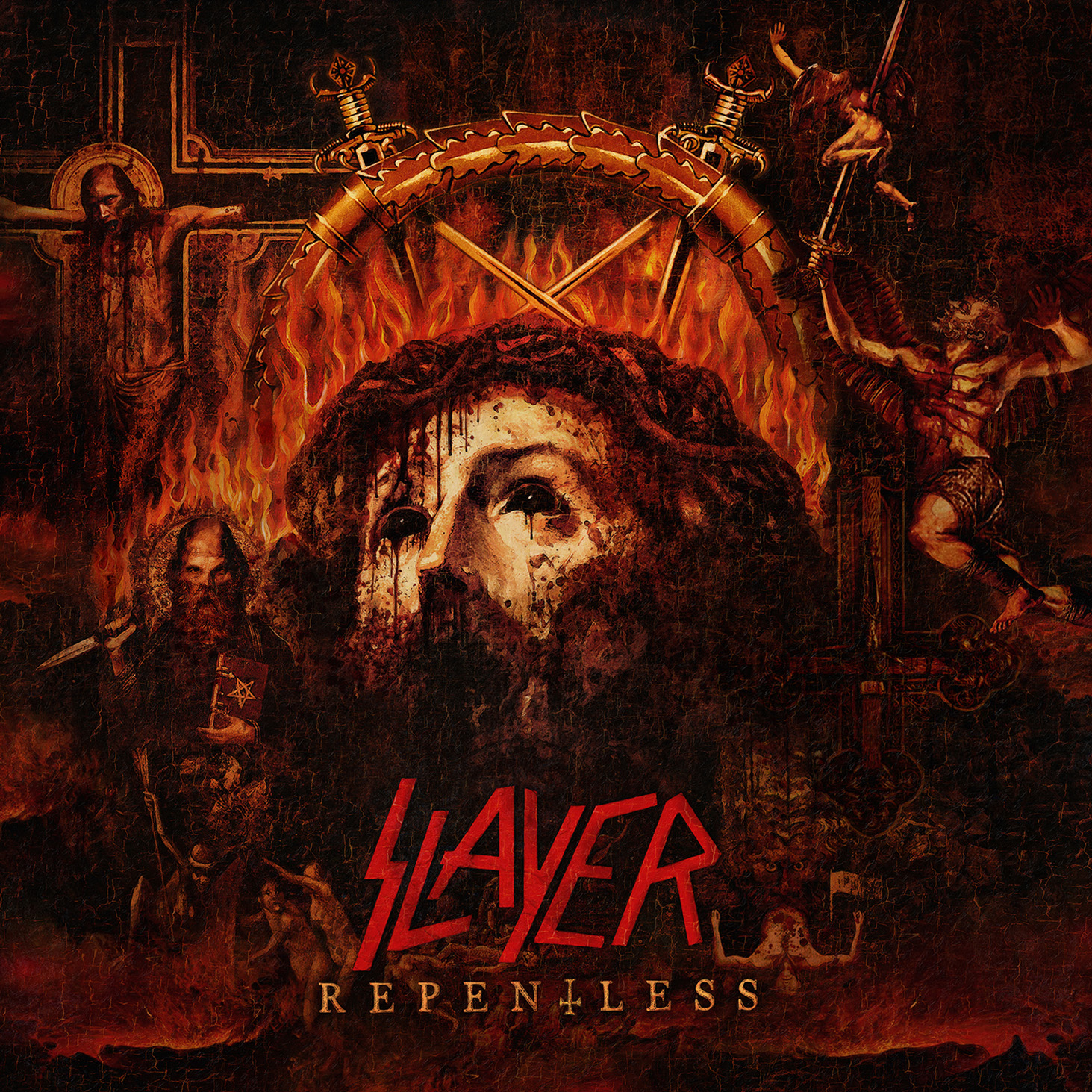
3) “Repentless” – Slayer
SLAYER, is there anything else I really need say? It sounds like it and feels like it, and that is what I believe this album needs to be. I know I cheated a little but with my top 3 list, because number three is two songs.  “Delusions of Savior” is the opening instrumental, and segues so well into opening the title track “Repentless”.


Top 3 Tracks:
  1. Take Control
  2. Vices
  3. Delusions of Savior / Repentless


2) “Condition Human” – Queensrychre
This album is very strong.  As the second album with singer Todd La Torre, I really felt the band jelled so much better than the previous album. I highly regard this album as better than or equal to their first two albums “The Warning” or “Rage for Order”. And while I did not include it, the opening track “Arrow of Time” would be my number four.


Top 3 Tracks:
  1. Guardian
  2. Hellfire
  3. Selfish Lives


1) “The Book of Souls” – Iron Maiden
Every song on this album is so strong and works so well together. On a first listen it can seem like the songs “When the River Runs Deep” and “The Man of Sorrows” are the weak links, but they grow on you as you listen to them. An almost perfect album and I dare say the best album they’ve made since ”Brave New World”, which I hold as my 2nd all-time favorite Maiden album.

I’m not doing a top 3 for this album because every song is so great and I believe it is worth it to buy the whole album.


Honorable Mentions:
“Hot Streak” – Winery Dogs
“Hollywood Vampires” - Hollywood Vampires
“The Bay Calls for Blood” – Death Angel [Live]
“Spookshow International Live” – Rob Zombie [Live]

Sunday, December 6, 2015

Supergroups, The Quick Burn Effect, and Hired Guns

Supergroups:

A supergroup is formed when a group of musicians from different bands join up for a musical project, and make an album. Shortly after they release it, they tour playing the music from the project and maybe a song or two from their main band or other projects. A notable supergroup was the band Cream. This band was most well known for their song “Sunshine of Your Love” on their album “Disraeli Gears”. Cream only lasted a couple of years, which was longer than most.


Many Supergroups have since been formed and broken up, with very few actually having longevity. One of the few supergroups that has shown longevity is Down. Down is a formation of musicians from the Louisiana metal music scene. With some of the mainstays of the group: singer Phillip H. Anselmo (Pantera), Pepper Keenan (Corrosion of Conformity), and Jimmy Bower (Eyehategod, Crowbar). This band celebrates the metal scene in New Orleans by spreading the unique metal music that was created there.


The Quick Burn Effect:

This term ‘the quick burn effect’ is when a new music group comes together, and it only lasts for a short time, with an average life span of about a year. The effect usually takes place during the tour or shortly after the tour, when one or multiple members leave to go on to other projects or back to their main band. If they aren’t replaced and continue on, the band is put off indefinitely, in music purgatory, or disbanded altogether. But there is a far worse outcome than this, the band never plays a live show, like the supergroup KXM (Ray Luzier, George Lynch, and (Doug) dUg Pinnick). After KXM recorded their album, they were too busy with other projects to go on tour together. The quick burn effect usually takes place in either a newly formed supergroup or an original project made up of one or two established musicians and new fresh musicians. A band that died off after only a few years was California Breed. It was comprised of Glenn Hughes, Jason Bonham, and new guy Andrew Watt. They recorded a fantastic record and then went on tour. After a few shows, Bonham left. They replaced him with another drummer but they only lasted a short time before disbanding. This behavior of short lived music projects is generally predominant in the rock and metal world than in other genres.


Hired Guns:

When an established band needs to replace previous members, they usually get hired guns. These musicians learn the material and only play with the band live or sometimes in studio. This can persist over a few years. Very few of these musicians actually become members of the bands full time, and even fewer are allowed to become full partners.
The main argument is the differentiation between bandmates and hired guns. Bandmates or band members are the people who have a vested interest in the band. They have invested their time and creativity into the band making it their own. Hired Guns or freelance players, are people that are brought in to fill a role and not much else. These musicians usually have one or two projects that are their main interest, and they are playing in this band or bands for extra income.

Music is both and art and a business. Some musicians want to work together to create something special outside their normal endeavors. Sometimes situations change and musicians need to be replaced for short or longer periods of time. Unfortunately, these projects can be short-lived. Creative and financial success is not guaranteed. It is most disappointing to those fans who listen and buy the music for they may only have one chance to experience the music live or even own a recording.

Sunday, November 29, 2015

Singing vs Screaming


Singing vs Screaming is one of the most heavily debated subjects when come to the Heavy Metal genre. This conflict splits the fans of metal right down the middle with very few people that go in between. Now my definition of screaming is that of screams, yells, barks, growls, and shrieks. As for my personal preference, I like singing more. I prefer to hear the lyrics being clearly audible with the melody. But that doesn’t mean I don’t appreciate the harshness of screaming.

Singing:
According to Dictonary.com, [singing] is “to utter words or sounds in succession with musical modulations of the voice; vocalize melodically.” But when it comes to singing and the music that goes along with it, one thing must present, that being melody.

When it comes to high pitch vocals, Joey Belladonna used his vocals to help Anthrax stand out from their peers. It differentiated them from other thrash metal bands, like Slayer and Overkill.


Iron Maiden was able to infuse screams into the singing of their songs. This was best shown in their live performances. Vocalist Bruce Dickinson would scream to extend a note to make it louder and fuller. This is where his nickname the “air raid siren” came from. But the best example of his screams are present on his first album he did with Maiden on the title track “Number of the Beast”.


Ronnie James Dio is best known for his vocal abilities and passion shown while singing the lyrics. In the first song he wrote with Sabbath, “Children of the Sea”, he demonstrated his superior vocal range.


Screaming:
Screaming is the broad term for any singing style where the vocals aren’t crisp and clean. According to Diconary.com [Screaming] is “to utter a loud, sharp, piercing cry. Or to emit a shrill, piercing sound” This style is more prevalent when the singer is trying to make a point. When the tuning drops and the riff get heavier, the screaming coincides with the music. While singing is possible with the music, guttural purging and shrieks are more common. Essentially screaming comes down to the type of music being played. Each style of music lends itself to a different vocals. Punk had no real singing, just more shouting. Through the years, this style evolved into the modern scream in metal.

Lamb of God are the latest in the arsenal of successful bands that utilize this brutal vocal style. This style of unrelenting screaming can be attributed to the monstrous vocal ability of D. Randall Blythe.


Judas Priest is known for their melodic music and Rob Halford’s high pitches. In the 90’s, they created a definitive song when they released their screaming assault titled “Painkiller”.


Dillinger is a progressive metal band that is so technical that it has been called math metal by some. When people listen their music for the first time, it can sound like a gurgle of noise.  But after listening to their music multiple times, their brilliance does come through


Even though there are two vocal styles, each one has its place in metal music. Singing is synonymous with high pitched vocals in the operatic singing style like Freddy Mercury. While screaming is signified by the harsh tone that coincides with the music. Both types have added to the appeal of metal music.

Saturday, November 21, 2015

What is an Album?


I have previously discussed the different genres of metal and the listeners of the music. Now before we move on, I feel compelled to inform you of the history of records.  But how did the music companies get the music out for people to listen to? What were the different mediums used to get the music out to the public? Originally there was the live performance or concert, then came radio, the vinyl record, the cassette, MTV, CD, MP3, and now music streaming. The music went from being analog recordings to digital recording in less than 35 years. 

Since the introduction of the LP vinyl “album” in 1948 by Columbia Records, it set the standard for the music industry. The LP revolutionized the music industry. Now people could own music recorded by their favorite bands. They could listen to their favorite music when they wanted to at home. People didn’t have to wait for concerts or listen to the radio anymore. It was considered revolutionary.


Back in the day music was put on vinyl. A large two sided black disk with grooves that are imbedded into it. A turntable would spin the record and on a platter. An “arm” with a needle on the end would go straight in the grooves of the vinyl. The signal from the needle was sent to a receiver amplifier and out to the speakers. On a vinyl there were two sides, a side A and B or 1 and 2. There are also two sizes of vinyl, a 7” and 12”. EP’s and LP’s would be the 12 inch diameter run at 33 1/3 rpm, while Singles would be the 7 inch diameter run at 45 rpm.


Singles would contain two songs - one on each side. Side A would have the song that the artist is advertising, while side B may have another song from the album, a live recording, or an original song that usually has no relation to the main song or album. As for the terminology, there is the Single, the EP or Extended Play, and the LP or Long Play.

An EP is characterized as being significantly shorter than and LP, and usually having about 4 to 5 songs. There are longer EP’s that can contain 8 to 9 songs, but these are usually composed of cover songs. Finally, there is the popular LP. These are what we usually see when we put on a CD or vinyl.

An LP can have a number of different songs, but as far as running time goes they are usually 50 minutes to an hour. There are also a subset of LP’s called double albums. Traditionally these are two vinyl’s or CD’s that are the makeup of the album.

What is on an Album? An album contrary to what some might think is not just a collection songs strung together under one title. An album, record, LP, or sometimes referred to as just a CD, is so much more! An album is an experience, a musical journey from the beginning to the end, where each song leads into the other. The reason why classic albums like Pink Floyd’s “Dark side of the Moon” is hailed as one of the greatest albums of all time is because each song on Dark side is integral to the record. Each song flows into each other forming not a collection of different songs, but forming a collaboration, or entity, that emphasizes the theme of the album.


From the 1950’s through the 1980’s it was popular to collect all the LP’s of your favorite groups. People would have vast collections of vinyl. Today, people would rather just buy a song or two from an artist, cherry picking the “best” songs. People now collect individual songs instead of LP’s. This is why today’s music industry is called a single economy, because people would rather buy singles or EP’s rather than full length records.

Sunday, November 15, 2015

Social Outlets for Metal

Outlets for Metal:

When it comes to being an outsider, as in someone who doesn’t join in the popular mainstream trends, it can be hard to find like-minded individuals who share your tastes in media (books, music, movies, etc.). Back in the day, you would have been hard-pressed to find someone with similar interests. In most cases you would have had to go to a show of band that you liked and socialize with the other concert goers. Small underground specialized newspapers and magazines would have been another way to keep in touch. In large cities, people used to live in the same communities so they could congregate together. Today with the internet, it is much easier to get connected no matter where you live. You can find hundreds if not thousands of people with similar interests. Today, there are many websites and social media pages devoted to metal bands and their music. Each of these outlets are for metalheads by metalheads. There are additional websites for the hard rock and classic rock fans.

A classic media method with staying power is through print media, specifically magazines. Photo journalism is still a popular medium. They give the reader a glimpse of what happens behind the scenes as well as the overall story. While some magazines from the heyday of the 1980’s have sadly not survived into the new millennium, many are still around. These magazines still publish physical copies that can be found, but also have their articles on their websites.

Podcasts and Radio are two more popular outlets, although the latter of which mostly you’ll have to look to satellite radio. Other media outlets include the mediums of television and documentary movies. There are more TV shows and documentaries now on the subject of metal music than there has ever been. Most of these are documentaries cover observations on Metal as music genre, or Metal culture and the effect it has on people’s lives. For movies there are

These movies range from a journey of what metal means to most fans, a documentary on a band, a mockumentary or rockumentary, and an observation on the music scene. Other than feature length pictures, on the small screen there are television shows like:

All of which happen to be on the VH1 Classic television channel.

Today, there are more options available to find and explore heavy metal music in every medium, but it can be overwhelming at times. To immerse yourself in this music and culture, the best way is of course to “get it from the horse’s mouth”, or in laymen’s terms to talk to other metal fans to get their personal perspectives.

Sub-genres:

My previous posts on the subjects of sub-genres were very fun to do, but mostly fruitless because they were overviews of different perceived styles of metal. Sub-genres from my perspective are too confining. They try to label or control a band’s creativity or style to a medium. This is true for all types of music or other art forms. Artistry doesn’t come from doing one type of thing over and over again. It is an evolving living thing. Creativity comes from adding or taking away certain things to change the art, or to come up with something that is entirely original and unique. Thus, the thought of categorizing artistic creativity is ludicrous. Trying to confine an artist to a certain style limits their possibilities for growth. In my earlier posts, I was not trying to portray the bands as having only one style. I was merely pointing out that some of their music fits into the category being discussed. For example, Iron Maiden would be categorized as New Wave of British Heavy Metal. If you analyze their more recent albums, you can clearly hear the progressive direction that Iron Maiden has taken. Ultimately a band chooses their own musical direction.

Sunday, November 8, 2015

Metal Culture and the Music Scene

During my discussions about the different genres of metal in my blogs, I have left out the vast majority of metal bands. These include the likes of Ratt, Blue Oyster Cult, UFO, and so many others. This is because when I talk about a genre, I highlight bands that feature the topic being discussed. If I went into a total in-depth analysis, the post would be a novel. The genres I have covered are abridged views of what they are, what to expect, and why they are significant to the history of Metal Music. To me, they are just fun to talk about.

The Fan Base:
The fans of metal music cover a wide variety of people from different genders, faiths, ethnic backgrounds, and countries around the world. Metal does have a distinct fan base, the outsiders. Metal was never meant to be pretty or conform to any standard of popularity. Most fans happen to be people who may not fit in or conform to the norms of society. They can find solace in this music and other fans like them. But if you had to, it’s pretty easy to point out a metalhead because they wear their pride loud and proud. They usually wear their favorite band’s t-shirt everywhere, and for most, metaling it up for a show can be simple or complex. The metalhead standard attire is denim and leather.


The Scene:
Within the music scene there are many artists that influence each other. Whether they’re contemporaries, old bands that inspire new bands, or vice versa there are defining bands of any genre. These bands that define each genre or subgenre are usually the most successful. For example, Metallica is the most successful Thrash Metal band. But you can hear the thrash metal sound as early as the band Anvil, which was in the late 70’s early 80’s. Of course there can be more than one successful band in a genre. In thrash there are the big 4, which are Metallica, Slayer, Megadeth, and Anthrax. The point is that every movement has their Beetles and there are many other bands which don’t receive the notoriety or spotlight they deserve.

Another thing that is common is the clash of different genres of music. The New Wave of British Heavy Metal was met with the opposition of Punk music which was coming out at the same time. While Punk took the spotlight for a short time it eventually imploded on itself. NWOBHH took over and continued on showing its longevity. I am not bashing punk music. Its music has its place in the history of metal. There are bands that have survived and are still around today. It’s just that the movement of punk was just go out there and play for the moment. It was not going to live a long sustainable life. Punk music’s message of anarchy is awe inspiring but didn’t have much staying power. Punk songs themselves don’t have the intricacy and complexity of metal music that was combating it.

During the 1980’s when MTV was still music television and when Glam ruled over the normal MTV airplay, there was a special program for other types of metal to get on MTV. This event was known as “Headbanger’s Ball”. This outlet allowed the bands that wouldn’t have had commercial airplay, get their videos played to the audience. They featured special guest hosts and making cameos on the program, such as Ozzy Osbourne.

The Event:
While most other music genres can have dance incorporated with the music, metal strays from traditional dance. Metal has two primary motions for the music. The Headbang and the Mosh Pit (of course there is the every popular stage dive and crowd surfing as well). The head bang is fairly simple but has many variations. There is the normal headbang, the side to side (this is when your neck is so tired from the normal headband but you still want to headbang), the varying degrees of the bodybang, and the windmill. For a more comedic twist on headbanging, Jared Dines has created a video of 10 ways to headbang (for beginners)


Mosh pits were incorporated into Metal from punk music. This ‘dance’ is better described as an event. It has many people running around jumping into each other. There are four different kinds of mosh pits, although two of them are variations of each other. There is the closed and open pit. This is essentially whether the people are close together or spread out. Depending on the density of people, you can tell which is which, but essentially they are circle pits that have people run around. The next is more of a unison of a tightly packed crowd and more looks like a wave of people than a traditional Mosh pit.


Of course there is an etiquette for moshing. If someone is down (falls), it’s up to the nearest person to help get them up. Also, not to drag a person who doesn’t want to mosh into the mosh pit. While a mosh pit may seem harmless, it can be dangerous. Injury can occur and it is advised not to bring anything of value, importance, or that can be broken easily into the pit.
There is one mosh pit that I haven’t talked about yet, and that is the most deadly of them all. “The Wall of Death”. There is only one way to describe this certain type of pit. Two sides of people clashing against each other, like they are reenacting a civil war battle without weapons.


Metal is more than a style of it’s a way of life, a religion even. This notion comes from the innate tribalism of Metal music. And for many a fan, going to a concert wearing denim and leather, and moshing, is like going to church.

Sunday, November 1, 2015

Power Metal, Pirate Metal, and Viking Metal


Power Metal:

Power Metal by itself is kind of ambiguous. To sum it up, its metal that utilizes high fantasy lyrics and over the top riffs. But even this is still limiting to what Power Metal is exactly. Let us go back to the beginnings with the band Rainbow. Rainbow was formed by Ritchie Blackmore of Deep Purple fame and the band Elf which had vocalist and lyricist Ronnie James Dio. Blackmore and Dio were the core members of Rainbow until Dio left for creative reasons in 1978. Dio then joined Black Sabbath for a time. He then formed his own band Dio, where he would continue into the realms of fantasy. Rainbow was one of the first bands to explore the high fantasy settings like in the one created by Tolkien. Dio contributed by painting picture of these fantastical things through his lyrics, having the listeners’ imagination paint the picture with songs like “Stargazer”, “Catch the Rainbow”, and “The Gates of Babylon”.


Since then, other artists have increased the influence of the genre, such as Iron Maiden and Judas Priest. Power Metal is unique in that it is mostly, if not all, exclusively European. This music thrives in large audience venues. In Europe, there are many open air festivals that fit the bill. Power Metal has been described as “Happy Metal”. The sound can certainly be described as such. The themes of this genre can be from the fantasy of dragons and elves, to that of Conan the Barbarian.


This led to other sub-genres like Pirate Metal and Viking Metal. These sub-genres added more to the fantasy themes. I believe these two sub-genres are self-explanatory.

Pirate Metal:

Pirate Metal is more about the adventures and debauchery of pirates. It reflects more of a swashbuckler theme like in the “Pirates of the Caribbean” movies, rather than modern pirates portrayed in the movie “Captain Philips”. None the less Pirate Metal gives that feeling of being in a tavern on one of those tropical islands where pirates frequented back in the day.


Viking Metal:

Viking Metal is very similar to Pirate Metal. But in recent years it has gone heavy with the immersion of Death Metal into the genre. Viking Metal innately already has a dark side to it because of the historic inspiration for the genre, the Viking raids in the 12th century. While there are many great stories of these raids this genre doesn’t stop there. They also delve into Norse myths and legends.


The link between Power/Pirate/Viking Metal:

Each sub-genre has different aspects to each. Some may be serious in their lyrical content, while others are more about having fun. Each one of them is enjoyable and fun in their own way. This can be said for all of Heavy Metal music. Heavy Metal isn’t about being overly serious. It’s about relieving destructive emotions in a positive way and making you feel good. Of course if it happens to have a good message or point out things wrong with society, then it becomes more than just a feel good song. It becomes auditory art.